
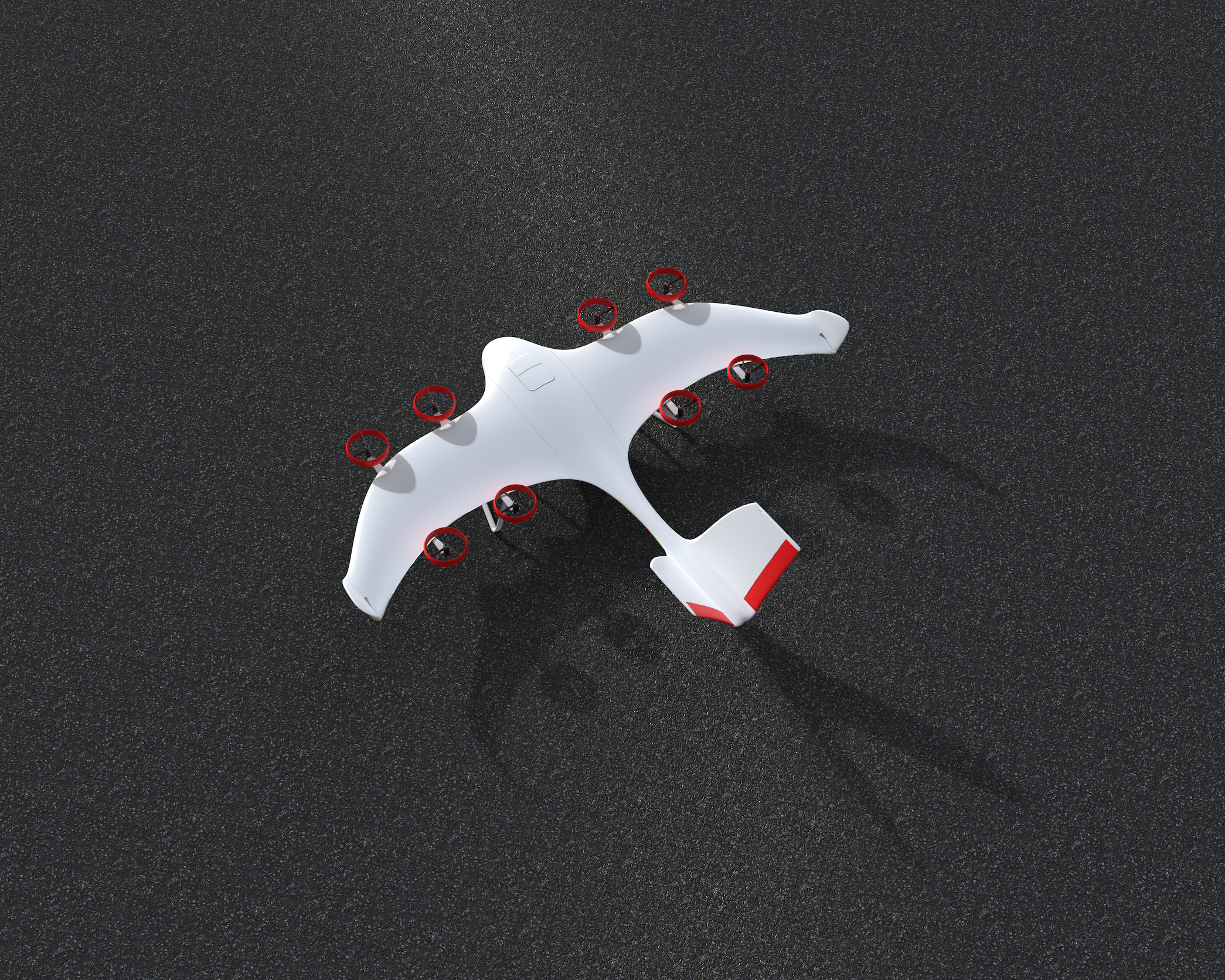
November 2025 - February 2026 A drone-based AED delivery system for cardiac emergencies in rural Germany..
Client: EASA
SANDRO
70,000
cardiac arrests per year in Germany
9.3%
average survival rate
~8 min
average rural emergency response time
About the ProjectSANDRO is a concept for a drone that delivers an AED directly to a cardiac emergency — designed not for engineers, but for the untrained bystander who has never held a defibrillator in their life.
-
Every minute without defibrillation reduces survival by 10%. In rural areas, ambulances simply arrive too late. SANDRO asks: what if the AED could get there first?
-
Building the drone was not the hard part. Designing one that a person in shock can immediately understand, trust, and use: that was the real brief.
-
SANDRO activates in parallel with emergency services. While a dispatcher guides CPR by phone, the drone flies autonomously to the scene. The concept includes the drone, a dispatcher interface, and a public communication strategy.
-
The project is framed within EASA's regulatory work on unmanned aerial systems — exploring what medical drone deployment could look like as autonomous aviation matures.
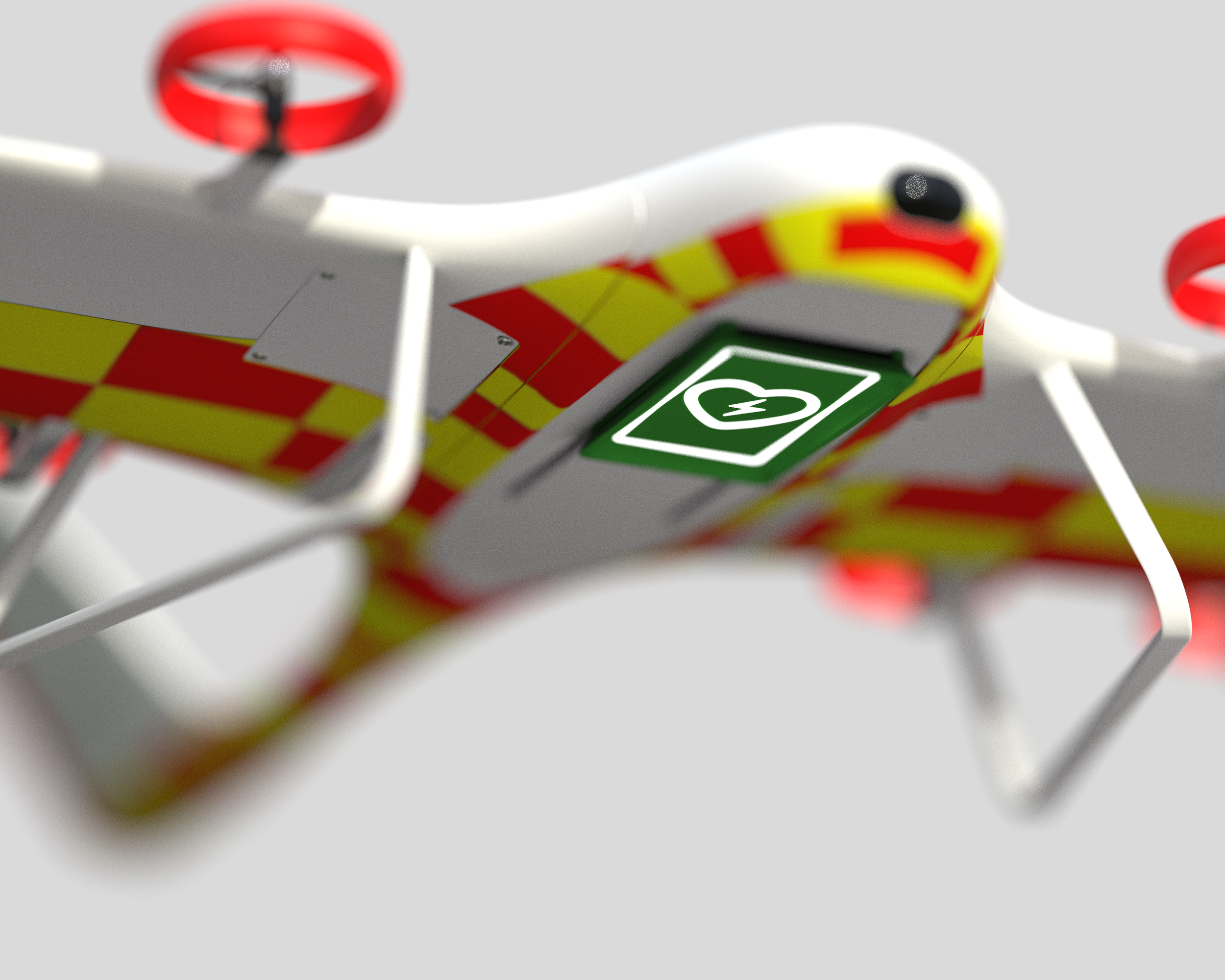
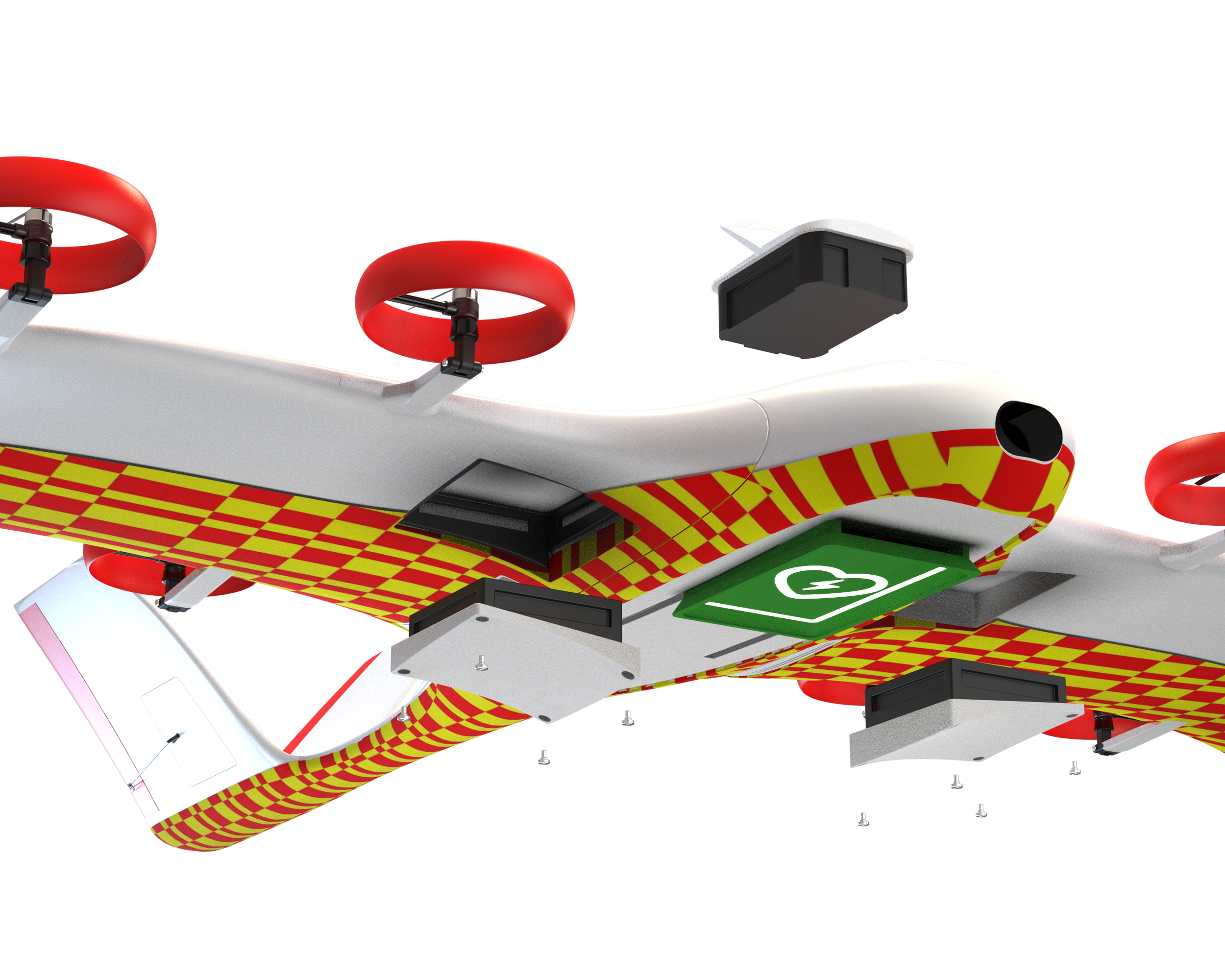
Reflective medical print
Battery
Airbag
AED
Battery
Camera
The Station
The drone is only as fast as the infrastructure behind it.
SANDRO lives in a compact, weatherproof station, placed next to medical centres to plug directly into existing logistics networks. The location is deliberate: supply chains, maintenance staff, and AED restocking are already there.
Always closed and ready
The station is sealed at all times: vandalism-proof, weatherproof, unobtrusive. The top opens only when a mission is authorised.
Battery saving
By eliminating powered take-off, SANDRO extends its range and preserves battery for what matters: the flight, the hover, and the controlled drop.
Catapult launch
The drone rests on an angled ramp inside the station. Take-off is typically the most energy-intensive phase of a drone flight. Through the catapult, the drone reaches its altitude in seconds with our using significant energy.
Reloading made easier
Because the drone always rests with its belly exposed, the AED compartment is accessible from below. Reloading is fast, intuitive, and requires no tools.
Dispatcher Interface
The dispatcher's job is to keep the patient alive and not to pilot a drone.
The interface was designed for dispatchers. Therefore, the system requires the minimal amount of decision making, focusing on efficiency.
Everything is done autonomously: assessment, deployment, identifying available drones and the flying itself. The dispatcher sees a live map of the drone’s surrounding and the one thing that needs to be done is: conforming the drop.
That single moment of human authorisation keeps oversight in the loop without pulling attention away from the person on the other end of the call.
Once SANDRO arrives, the AED is released automatically and triggered remotely by the dispatcher.
No bystander needs to touch, catch, or interact with the drone itself. This removes a critical moment of hesitation: in a high-stress emergency, any uncertainty about how to operate a device costs time.
Touchless AED delivery
Looking ahead
SANDRO is grounded in what already exists and that is exactly the point .
The drone form is inspired by the Wingcopter 198, a commercially available delivery drone that meets every technical requirement the concept demands.
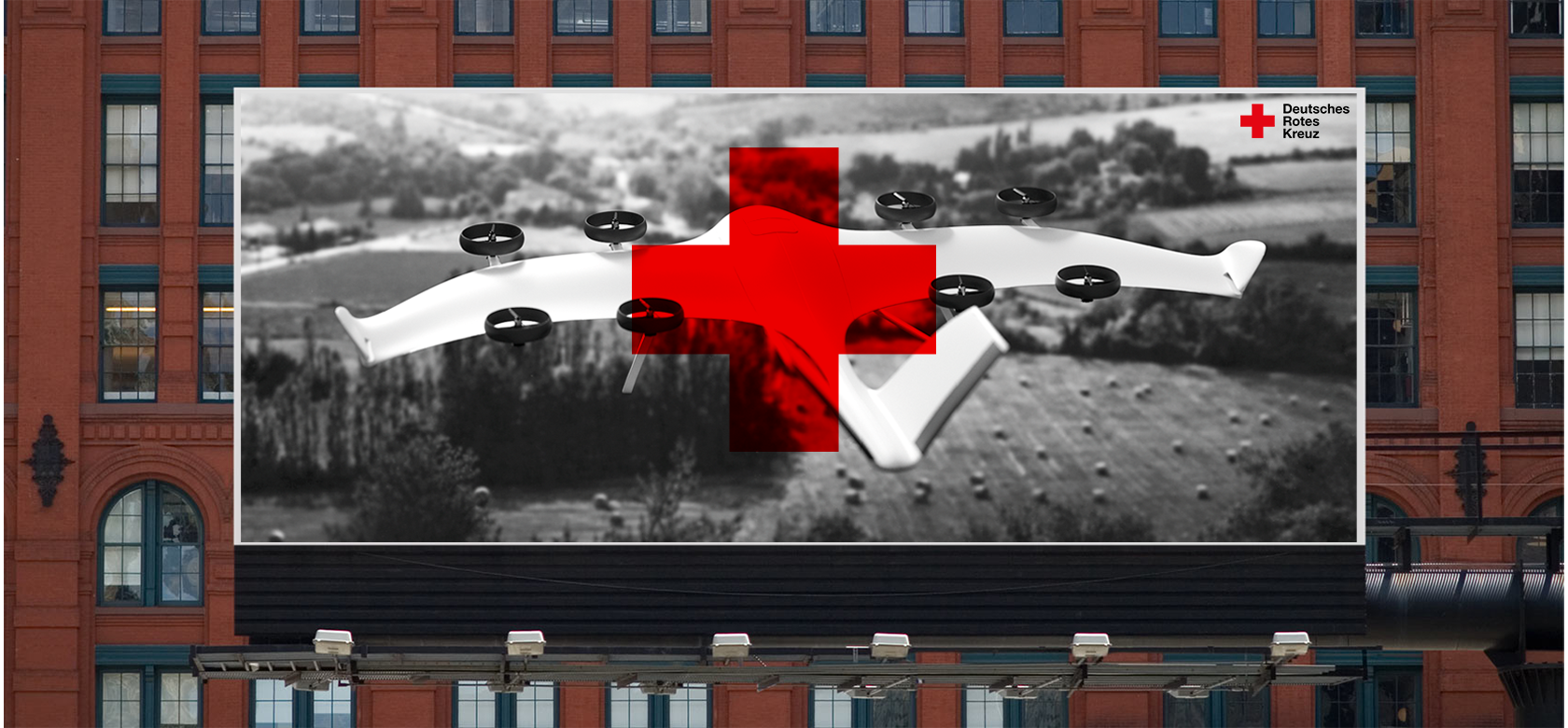
The adaptation was not about reinventing the hardware. It was about asking what a drone designed specifically for medical trust from bystanders would look like and how form, colour, and signal design can make an autonomous machine feel safe and legible.
As autonomous aviation regulation matures, the gap between a concept like SANDRO and a real system narrows. The infrastructure thinking is already there. The hardware is already there.